
Compass Wellbeing CIC
wins Living Wage Leader (Third Sector) Award

The award is ours, the achievement is shared

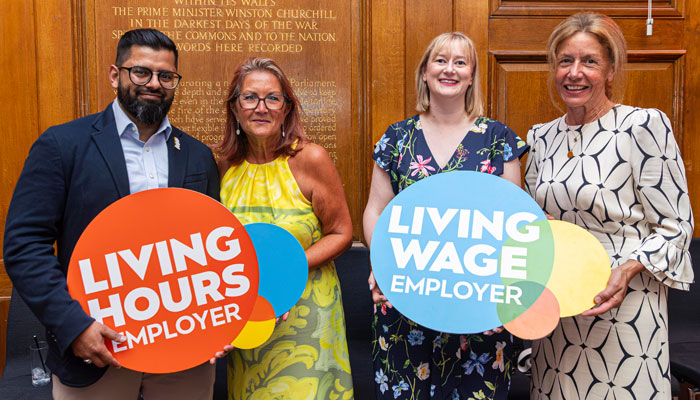
Compass Wellbeing CIC has been named Living Wage Leader (Third Sector) at the Living Wage Champion Awards 2026, held on Tuesday 7 July at Church House, Westminster, as the Living Wage movement celebrated its 25th anniversary.

The award recognises exceptional leadership in advancing the real Living Wage across the charity and voluntary sector. For us, it recognises something we believe deeply: that fair pay and community wellbeing go hand in hand, and that lasting change is built with the sector, not for it.

Through the children and young people’s mental health programme we help to deliver with the NCEL CAMHS Provider Collaborative and the NHS, more than 230 people have been uplifted to the real Living Wage across 51 VCFSE organisations in 13 London boroughs, spanning North Central and East London. Fair pay is embedded in the terms of the funding itself, so it lasts beyond any single grant.

That commitment continues to grow: work is already underway with a further 57 organisations, embedding the real Living Wage in the programmes we deliver together, with more to come.

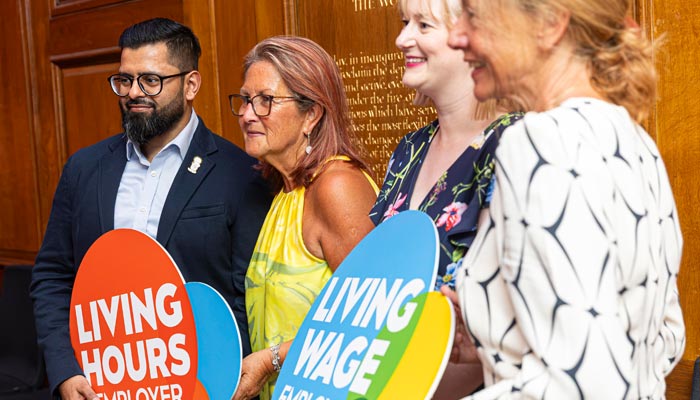
Alongside our partnership work, Compass Wellbeing is an accredited Living Wage Employer and Living Hours Employer, guaranteeing fair pay, secure hours and contracts that reflect the hours people actually work.

Mathew Sheehan, Chief Executive of Compass Wellbeing CIC, said: “Fair pay is not separate from our mission, it is our mission. This award really belongs to our VCFSE partners across North Central and East London, who committed to paying the real Living Wage through the programmes we help to deliver, and it is wonderful to see some now exploring accreditation as Living Wage employers in their own right. Thank you for building a fairer sector with us, not for us.”

Graham Griffiths, Director of the Living Wage Foundation, said: “These awards are such a wonderful opportunity to celebrate the hard work, dedication, and passion that has gone into growing the Living Wage movement over the last 25 years, and I congratulate all of the winners on their outstanding achievement. With nearly 17,000 Living Wage Employers, almost 300 Living Hours Employers, and over 100 Living Pension Employers now accredited, together we are proving that it is possible to create work that works for everyone. With the vital help of committed advocates, our campaign has driven up standards of employment and transformed millions of people’s lives already, building a legacy that has changed the world of work for the better. I warmly congratulate Compass Wellbeing CIC on their well-deserved award and thank them for their support for the Living Wage movement.”

If your organisation is exploring the real Living Wage or Living Hours, we would love to talk. Contact us and we will gladly share what we have learned.

About the Living Wage Foundation    

The Living Wage Foundation is the organisation at the heart of the independent movement of employers, people and communities who are driving up employment standards so that everyone has a decent standard of living now and in the future. Through the Living Wage, Living Hours and Living Pension accreditations, it champions and celebrates employers who make an ongoing commitment to do the right thing by their employees by providing the security and freedom they need to thrive. The Living Wage Foundation is part of Citizens UK; the UK’s biggest, most diverse and effective people powered alliance. https://www.livingwage.org.uk/

What is the real Living Wage?  

The Living Wage Foundation’s real Living Wage remains the only UK wage rate independently calculated based on the cost of living, rising annually based on living costs. It gives employers the confidence they are paying a wage that meets every day needs. The real Living Wage applies to all workers over 18 – in recognition that young people face the same living costs as everyone else. This year’s rates are £13.45 across the UK, and £14.80 in London. These figures are calculated annually by the Resolution Foundation and overseen by the Living Wage Commission, based on the best available evidence on living standards in the UK and in London.

Nearly 17,000 accredited employers choose to pay the real Living Wage on a voluntary basis. The campaign for a real Living Wage has secured over £4.1bn of pay rises for low paid workers and made a profound difference to millions of lives around the UK since it began 25 years ago. It enjoys cross party support.

What about the Government’s national living wage? 

In July 2015 the Chancellor of the Exchequer announced that the UK Government would introduce a compulsory ‘National Living Wage’ (NLW). This new government rate was a new minimum wage for staff over 25 years old. It was introduced in April 2016 and the rate is £12.71 as of April 2026. From April 2024 it applies to everyone over 21 years old.

The rate is different to the Living Wage rates calculated by the Living Wage Foundation. The government rate is based on median earnings, while the Living Wage Foundation rates remain the only ones calculated according to the cost of living in London and the UK. A full-time worker paid the £13.45 real Living Wage will receive £1,400 in additional wages annually compared to the current Government minimum. For a full-time worker in London this figure rises to over £4,000.

Living Hours and Living Pension

The Living Wage Foundation has also developed two complementary schemes for employers who want to go beyond paying the real Living Wage to support their staff.

Living Hours is a new standard designed to tackle insecurity of hours. There are now almost 300 Living Hours employers going beyond payment of the real Living Wage to also provide a guaranteed minimum of 16 hours work a week, a month’s notice of shift patterns and a contract that reflects hours worked.

Living Pensions is a voluntary savings target for employers that was developed to tackle poverty in retirement. There are now over 110 Living Pension Employers committed to helping workers build up a pension pot that will provide enough income to meet basic everyday needs in retirement.